How AI-assisted search is changing how customers understand your business
Customers are not the only ones reading your website. Search engines, maps, directories and AI-assisted search systems rely on the same page to work out what you do, who you serve, and whether you’re relevant.
"We're a bathroom design and installation business based in Wantage, Oxfordshire , working with homeowners across the South East . We're Which? Trusted Trader accredited and free on-site consultations."
Your website is no longer just a brochure
It is also an important source of information for the systems that help people find, compare and understand businesses – before a human ever reads a word of it.
Google's own guidance says its generative AI features in Search - AI Overviews and AI Mode - rely on the same core principles as standard search: useful, relevant, accessible content on a site that can be understood by Google.
AI Overviews and AI Mode continue to rely on the same core principles that apply to search - useful, relevant, accessible content and a website Google can understand.
MICROSOFT
Bing Generative Search uses AI to review sources from Bing's search index and create a summary answer with supporting links.
New services are added. Customer groups change. Specialisms strengthen. Commercial priorities shift. The website often keeps describing the business the way it did months, or years, ago – creating a gap between what the business actually does and what the website appears to say.
Think of it as checking the brochure first
Before asking whether enough people are finding your website, it’s worth asking a simpler question: is the website describing the business clearly and accurately, today?
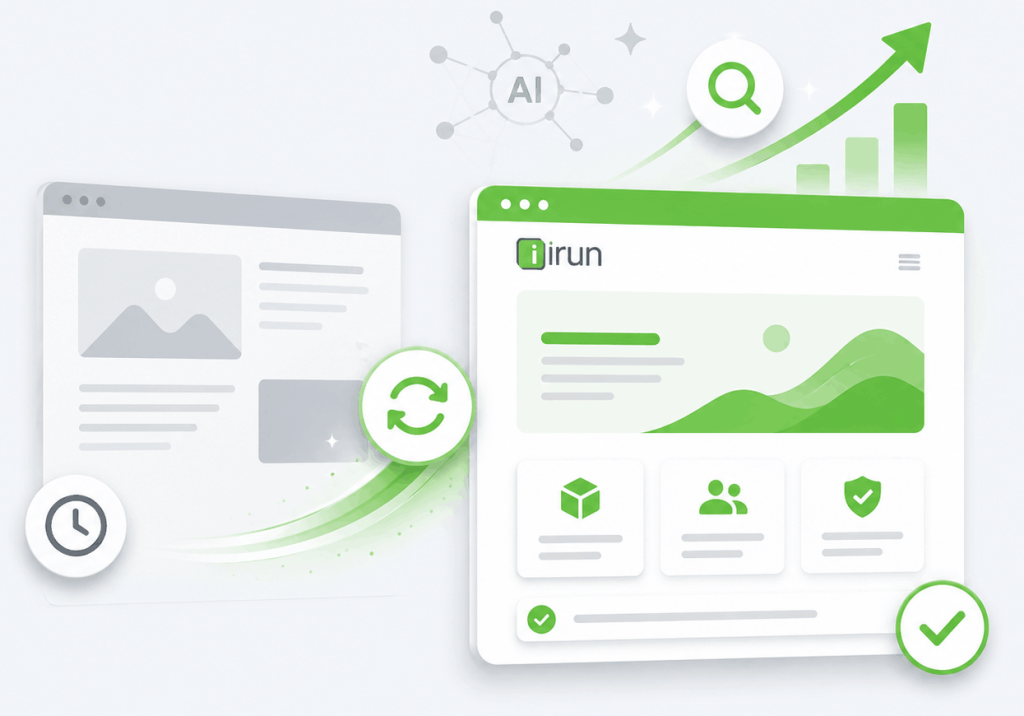
- Does it explain the right services?
- Does it speak to the right customers?
- Does it include the evidence and trust signals that help someone feel confident enough to make contact?
- Is it clear what the business does, today?
- Is it clear who the business serves, today?
- Can both people and AI-assisted tools find the proof that builds trust?
It relies on the information it can access, interpret and compare — your website, business listings, structured data, reviews, third-party mentions and other publicly available sources. Your site should make it easy to understand:
0 1
What the business does
The core offer, stated plainly.
0 2
Who it serves
The core offer, stated plainly.
0 3
What the business does
The core offer, stated plainly.
0 4
Which services matter most
Not buried beneath older or lower-priority content.
0 5
Why a customer should trust it
Accreditations, reviews and proof points.
0 6
What to do next
A clear, consistent call to action.
- Important services are mentioned only briefly
- Locations or service areas are unclear
- Proof points, accreditations or reviews are underused
- The business has changed, but the website hasn't caught up
- Newer or higher-value services are missing
- The ideal customer is not obvious
- Calls to action are weak or inconsistent
Is this relevant to me?
Do they provide what I need?
Do they work with people like me?
Can I trust them?
What should I do next?
If those answers aren’t clear, the visitor may leave, delay, compare alternatives, or never make contact. The same principle applies to search engines and AI-assisted tools – they can only work with what they can interpret. Clearer business information gives them a better chance of understanding what you do, and when you’re relevant.
Quick Comparison Overview
| Metric / Feature | SEO Search Engine Optimisation | AEO Answer Engine Optimisation | GEO Generative Engine Optimisation |
|---|---|---|---|
| Primary Goal | Drive clicks and organic website traffic. Website visits | Serve as the immediate, definitive answer. Direct answers | Get cited and summarised by AI models. AI visibility |
| Target Platform | Traditional search engines such as Google and Bing. | Featured snippets, voice search, Alexa and Siri. | AI platforms such as ChatGPT, Perplexity, Claude and Gemini. |
| Format Style | Lists of blue links displayed on a search results page. | Short paragraphs, bullet points, FAQs and structured tables. | Synthesised answers with inline mentions and citations. |
| Core Metric | Keyword rankings, click-through rate and page views. | Impression share in zero-click answer boxes. | AI brand mentions, citation rate and share of voice. |
Swipe horizontally to view the full comparison.
- What your business appears to do
- The main services or products identified
- The audiences your website appears to address
- How the business appears to be positioned
- Points that may need checking, correcting or expanding
Customers are not the only ones reading your website. Search engines, maps, directories and AI-assisted search systems rely on the same page to work out what you do, who you serve, and whether you’re relevant.